
CIOReview APAC Weekly Brief
Be first to read the latest tech news, Industry Leader's Insights, and CIO interviews of medium and large enterprises exclusively from CIOReview APAC
A featured contribution from Leadership Perspectives: a curated forum reserved for leaders nominated by our subscribers and vetted by the CIOReview Advisory Board.

Drive Digital Transformation With A Human-Centric Approach
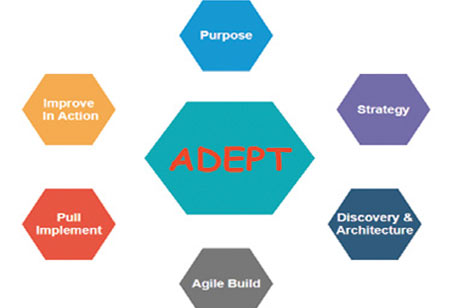
What’s the higher organizational purpose of driving digital transformation in industrial companies? What are the business objectives we should target at? And how should we drive the transformation journey? Those are basic questions. After leading the digital transformation journey for a large industry company for consecutive six years, I, however, find the very answers to those questions become real key to fine tune strategy, roadmap, and make go/no-go decisions in touch situations. This even has become my first lesson when I recruit new people into my organization.
The company I have worked for is anoperation-oriented enterprise, with around 20 manufacturing facilities in the region. Each plant has 1000 to 2000 operators in the shop floor, even after years’ efforts on automation and deploying machines.It is a complex operation business indeed. When we started the digitalization journey back to year 2015, there were internal and/or external triggering reasons, that were more like bottom-up. After time went to late 2016 when we addressed those triggering things, we started to think, also got to be asked frequently, whether we should continue the journey andwhat should be our transformational purpose if we continue.
We then touched base with many different groups of people to understand where they need assistance to deliver their business performance and consulted external parties how others did. We received many right answers, like cut out people, reduce inventory, improve product quality, and etc.Meantime we also questioned ourselves where we wanted to make a difference.
“We wanted to equip people with best-in-class digital systems and tools to be able to do their jobs effectively and efficiently”
Eventually we figured out our purpose is to empower our people to outperform. We wanted to equip people with best-in-class digital systems and tools to be able to do their jobs effectively and efficiently. Withthis in mind clearly, we were not looking at how many machines we connected with systems, how many headcounts we have cut by implementing systems, what new technologies have been deployed, and etc. Instead, we measure our achievement by counting how many values we offer to our people.
With the higher purpose in place, we framed our digitalization strategy, that is to equip our people at all levels with best-in-class business operation systems to run our business. We use this to consistently align people’s vision at all level.
Following, we invested a significant amount of time to interview with various stakeholders, physically saw and felt their pain points. We gave up the convenience to be directly fed with so called business requirements. We tried to live in the real lives of our customers, our shift leaders, our manufacturing managers, quality supervisors, to get the 1st hand insights for the business issues to be addressed. This approach is very different from the typical approach we do IT projects where we expect clearly written customer requirements that we can subsequently work on the system functional requirements with. This is the third step of our human-centric approach, to discover and define the business problems with first-hand information, and to put together enterprise designs.
When we come to the common understanding of the business issues, it is the time to define the solutions. Large companies usually have spent years and years to implement IT systems. Digitalization is not about adding another system. We use the earlier defined architecture designs to navigate the solution designs, andtry to keep the execution of every single project within three to six months. Each project launch though has to be a business launch.We execute this part of solution design process all the way along the way with our targeted users. For example, we built prototypes early to capture feedback from users, as our goal is to build systems our users love to use and feel great to use it.
